
What Is Caribana? Toronto's Caribbean Carnival, Explained
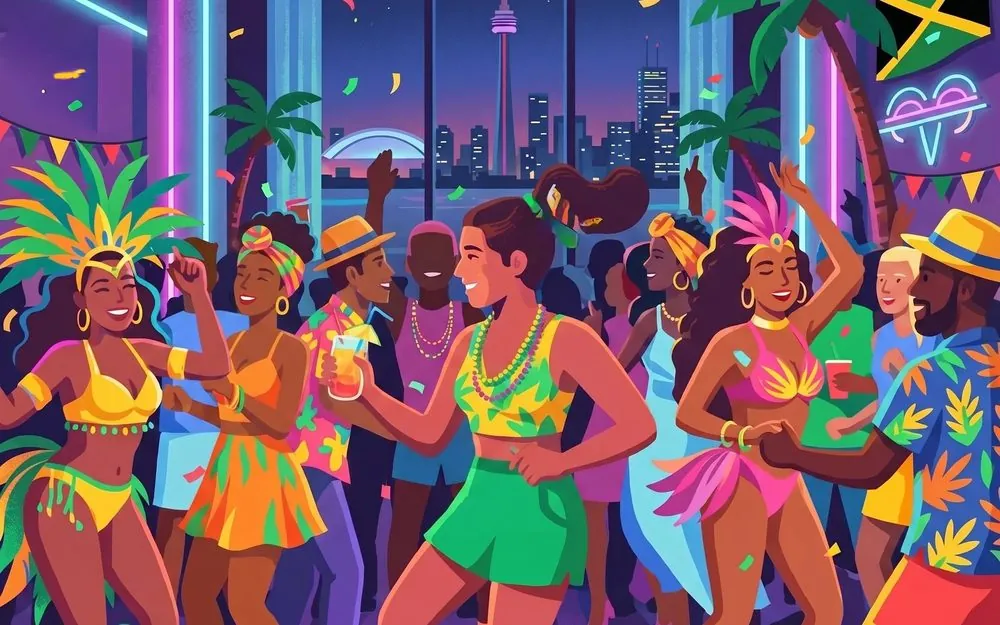
Caribana is the biggest party Toronto throws all year — and a lot more than a party. Officially the Toronto Caribbean Carnival, it's North America's largest Caribbean festival: a weeks-long celebration of Caribbean culture built around a single, enormous moment — the Grand Parade, where thousands of costumed masqueraders move down Lakeshore Boulevard behind trucks of soca. In 2026 the core weekend runs Thursday July 30 to Monday August 3, with the parade on Saturday August 1. This is the plain-English version: what Caribana actually is, where it comes from, what happens across the weekend, and how to do it right.
How we know this
This guide combines 20+ years of attending Caribana in person — on the road, in the fetes, at the parade — with the official Toronto Caribbean Carnival programme (torontocarnival.ca), Destination Ontario, and historical records. No paid placements. 2026 dates are confirmed where possible; prices and timing shift year to year, so reconfirm anything time-sensitive before you go.
What Caribana is — and where it comes from
Caribana started in 1967 as a gift. Toronto's Caribbean community put it together to mark Canada's 100th birthday — the very first parade drew around 50,000 people — and it stuck, growing into the festival that takes over the city every summer. Today the Grand Parade alone pulls well over a million people to Lakeshore, the wider festival draws an estimated two-million-plus, and Caribana pumps roughly $400 million into the economy each year — one of the largest cultural events in North America. (Officially it's been the Toronto Caribbean Carnival since the corporate-sponsorship era, but almost everyone still calls it Caribana.)
At its core, Caribana is Toronto's version of carnival — the centuries-old Caribbean tradition, with the deepest roots in Trinidad and Tobago, that mixes masquerade, music and street celebration. That's where the word "mas" (short for masquerade) comes from, and why the costumes, the bands and the road march are central rather than decorative.
It also carries real history. The Grand Parade's Saturday lands on the August long weekend, which lines up with Emancipation Day — August 1, 1834, when slavery was abolished across the British Caribbean. So underneath the feathers and the soca there's a celebration of freedom and survival. You don't have to turn it into a history lecture to enjoy the weekend, but knowing it's there is part of showing up well.
Today "Caribana" is really an umbrella over a lot of moving parts: the Grand Parade, J'ouvert at dawn, the King and Queen costume showcase, the Pan / steelpan competitions, a junior carnival for kids, and — powering the whole social side — dozens of fetes (parties), day and night, all weekend long.
When is Caribana 2026 — and how the weekend actually flows
The headline dates for 2026: Thursday July 30 through Monday August 3, with the Grand Parade on Saturday August 1. The wider festival has events scattered through July, but the long weekend is when it all peaks. Here's the honest, lived-in version of how the days feel — not the official brochure:
- Thursday — the warm-up. People are flying in and a lot of folks take the day off work. The first fetes kick off — the early-weekend warm-up parties that set the tone before Friday and Saturday go full throttle.
- Friday — the official kickoff. This is when it really opens up: fetes and parties everywhere, day into night. Along with Saturday, it's one of the two biggest days of the whole weekend.
- Saturday — the main event. The Grand Parade. Most people are on Lakeshore for the road during the day, then roll straight into the night parties afterward. If you only do one day, make it this one.
- Sunday — recovery, but not quite. A slower, sleep-in kind of day for a lot of people — except there's also a strong run of "last lap" parties and final-fun day parties for those with gas left in the tank.
- Monday — the send-off. The remaining day parties before everyone heads home. A lighter, bittersweet, one-more-time energy.
The short version: if you can't do the whole weekend, build your trip around Friday and Saturday. That's the centre of gravity.
The Grand Parade: what it is, and how to experience it
The Grand Parade is the centrepiece — an all-day procession down Lakeshore Boulevard from Exhibition Place. Masquerade bands move along the route in their costumes, each behind a truck stacked with speakers pushing soca, with the crowd "chipping" (the carnival shuffle-walk) and wining alongside. It runs roughly 8am to 8pm and draws over a million people to the road, which makes it one of the single biggest events in the country. The parade has followed this Lakeshore route into Exhibition Place since 1991 (earlier editions wound through downtown on Yonge and University).
Watching it: the ideal play is to get there early and claim a good spot before the crowds thicken. But don't stress if you're running late — the route is long, and as long as you're willing to walk a bit you can almost always find somewhere to slot in and catch the bands. Bring sunscreen, water and a hat: the Lakeshore route is fully exposed and early August in Toronto is hot.
Being in it: if you want to be on the road in a costume rather than watching from the sidelines, that's called playing mas. You join a masquerade band ahead of time, buy into one of their costume sections, and march with them on the day — usually with drinks, food and security included. Costumes sell out and most bands want you committed by the spring, so it's a plan-ahead move. Registration usually opens in April–May — bands throw "launch" parties to reveal the year's costumes, and many take sign-ups through the PlayMas app — typically with a deposit around $250 and the balance due at costume pickup. First-timers often start with an inclusive, beginner-friendly band like Toronto Revellers ("The People's Band"); bigger names like Tribal, Carnival Nationz and Saldenah run larger, more competitive sections. The Reddit community r/CaribanaToronto is the best place for current, on-the-ground advice.
Beyond the parade: the rest of carnival
Caribana is bigger than one Saturday. The pieces worth knowing:
King & Queen Showcase — the night before the Grand Parade at Lamport Stadium, where the most elaborate individual costumes (towering, hand-built structures that can stand three storeys of feathers and wire) compete for the crown. It's the artistic peak of the mas tradition.
Pan Alive / steelpan — the steel-pan orchestra competition, the most distinctly Trinidadian part of the weekend. Dozens of players, one shimmering wall of sound — genuinely moving, and totally family-friendly.
Calypso Monarch — a judged calypso competition (running since 1980) where lyrics, wit and social commentary matter more than BPM. The thinking person's corner of carnival.
Junior Carnival — the kids' parade earlier in July, the family-friendly on-ramp to the whole tradition.
And then there's J'ouvert, the pre-dawn paint party — which deserves its own warning label, below.
Fetes: the parties that power the weekend
If the parade is the heart of Caribana, the fetes are the bloodstream. A fete is simply a carnival party, and over the weekend they run nonstop in two modes: day parties (afternoon into evening, sunglasses, jerseys, easy energy) and night parties (later, dressier, higher-octane). Plenty of people do both in a single day.
A few things worth knowing as a newcomer: tickets range from plain general admission up to "all-inclusive", where food and drinks are baked into the price — great value at a good party. Dress for the format (breathable and comfortable for day parties; a step up at night). And bigger isn't always better — the right fete is the one whose music, crowd and energy match the night you want, not just the one with the biggest name on the flyer.
That's exactly what we do. We run our own slate of day and night fetes across the whole weekend — built around the music and the vibe, not the hype — and our Caribana Weekend Planner matches you to the exact ones that fit your days, your crew and your energy, then builds your fete schedule for you. Skip the guesswork: see the planner below.
J'ouvert: the dawn party (you'll love it or skip it)
J'ouvert — from the French jour ouvert, "daybreak" — is the pre-dawn celebration that traditionally opens carnival. People gather in the early-morning dark for paint, powder, music and a loose, joyous mess before the sun comes up.
Straight talk: it's polarizing. It's a beautiful tradition and some people build their whole weekend around it. It's also genuinely messy — the paint and powder get everywhere, including on your clothes and your car, and that part annoys a lot of people (us included). So treat it as optional. If getting covered in colour at 5am sounds like joy, go all in. If it sounds like a laundry bill, skip it with zero FOMO and meet everyone at the parade.
The sound of Caribana
The music is the festival. If you only learn one word, make it soca.
Soca — the fast, euphoric Trinidadian carnival sound — is the heartbeat of the road and almost every fete. Calypso is its older, more lyrical parent, heavier on storytelling and social commentary. From Jamaica you get dancehall and reggae, both heavily woven through the night parties. Steelpan (the Trinidadian steel-drum orchestras) gets its own competition stage. And these days Afrobeats crosses over hard, sharing the night with the Caribbean sound at a lot of events. It all blends — but soca is the thread that ties Caribana together and sets it apart from a regular Toronto night out.
What to eat
Caribana eating splits into two lanes: the real-deal Caribbean food the weekend is built on, and Toronto's wider dining scene if you want to mix in something fancier.
The essentials. Jerk chicken off a roadside drum, doubles (the Trinidadian curried-chickpea street-food classic — the unofficial fuel of carnival), oxtail, curry goat, roti, festival, fried fish and bake-and-shark. You'll find it along the parade route and at vendors around every event. For a proper sit-down version, head to Little Jamaica along Eglinton West — the historic heart of Toronto's Caribbean food scene — and the Caribbean spots around Scarborough.
If you want to level up. Toronto's a serious food city, so it's easy to bookend a party weekend with something elevated — the city's Michelin-recognized rooms and buzzy new openings are a short ride from the action. A long lunch or a nice dinner is a smart way to refuel between a day party and a night one.
Getting around & what to bring
Driving is the trap. Traffic around Caribana weekend — especially near the parade — is a genuine nightmare, road closures stack up, and parking near Lakeshore is effectively impossible. Don't build your day around a car.
Best moves: rideshare (Uber/Lyft) is the most comfortable option if you can stomach surge pricing, and transit is honestly the easier call for the parade — the TTC and GO get you close without the parking headache. For the parade specifically, take a subway to Bathurst or Dufferin and transfer to the 509 or 511 streetcar toward Exhibition Place. It'll be packed, but packed-and-moving beats stuck-in-gridlock. If you must drive, expect $40+ to park near the route — a Green P lot is the saner bet. Either way, sort your ride home in advance; that's where people get stranded.
Pack like a regular: sunscreen, a hat, way more water than you think, a portable charger, cash for vendors, a crossbody bag (keep your phone and cash secure in the crush), comfortable shoes you don't mind trashing — and your flag.
Etiquette & respect: how to show up right
Caribana is welcoming — a hugely mixed crowd, everyone invited. A little awareness goes a long way:
Wining. Wining (the hip-rolling carnival dance, often with a partner) is part of the culture, and catching a wine with a stranger is normal and fine. The etiquette is about how: approach slowly, never force it, and read the response. If someone's into it, you'll know; if you sense any hesitation, back off immediately and keep it moving. Consent and easy energy are the whole game.
Flags. Bring your flag and wave it — reppin' where you (or your family) are from is encouraged, not frowned on. It's one of the best parts of the day.
The bigger picture. Remember the roots — this is a celebration with deep cultural and emancipation history. You don't need to tiptoe; just come to celebrate with the community rather than treat it as a backdrop, and you'll fit right in.
Is Caribana safe? Clearing up the misconception
Caribana sometimes gets painted as "dangerous" or "ratchet." In our experience — 20+ years of it — that's mostly a stereotype. The reality is overwhelmingly a good time: people are there to hear soca, dance, wave their flags, watch the parade, catch a few wines and meet people. It's not that serious; it's joy.
Use the same street smarts you'd use at any event with a million people — keep your crew together, mind your phone and wallet in tight crowds, pace your drinking in the heat, and lock in your ride home. You'll also see people slip past the barricades to jump into the parade itself; it's technically not allowed, but it's a normal, long-running part of the day and not some major crime. Show up to enjoy it and it'll show you a great time.
Plan your weekend
Build your Caribana itinerary in 60 seconds
Answer a few quick questions — which days you're out, day-party or night-party energy, your vibe — and get a custom weekend plan: where to be, what to eat, and the exact fetes to hit.
Start the Caribana PlannerCaribana FAQ
What is Caribana?
Officially the Toronto Caribbean Carnival, Caribana is North America's largest Caribbean festival. It began in 1967 as Toronto's Caribbean community's gift to Canada's centennial and grew into a weeks-long carnival rooted in the Trinidad mas tradition. Its centrepiece is the Grand Parade — thousands of costumed masqueraders down Lakeshore behind trucks of soca — surrounded by J'ouvert, steelpan, and dozens of fetes. The festival also carries Emancipation Day history (slavery's end in the British Caribbean, August 1, 1834).
When is Caribana 2026?
The core weekend runs Thursday July 30 – Monday August 3, 2026, with the Grand Parade on Saturday August 1 along Lakeshore Boulevard. Events are scattered through July, but the long weekend is the peak — and Friday and Saturday are the two biggest days.
Is Caribana safe?
For the vast majority of people, yes — it's a joyful weekend. The "dangerous" reputation is mostly a stereotype; people are there to dance, watch the parade and have fun. Use normal big-event sense: keep your group together, mind your belongings in crowds, hydrate, and plan your ride home.
What is J'ouvert?
The pre-dawn party that traditionally opens carnival — paint, powder and music in the early-morning hours. It's a real tradition and divisive: some love it, but the paint and powder get on everything (clothes, cars). Totally optional — skip it with no FOMO if it's not your thing.
What's a fete?
A carnival party — the social core of the weekend. Day parties (afternoon, casual) and night parties (later, dressier). Tickets range from general admission to "all-inclusive" (food + drinks included). Many people hit several across the weekend.
Can non-Caribbean people go to Caribana?
Yes — everyone's welcome, and the crowd is hugely mixed. Just come with awareness and respect for the culture and emancipation history behind it, follow the etiquette around wining and flags, and you'll have a great time.
How do I get into the parade in a costume?
That's "playing mas": you register with a masquerade band ahead of time and buy into a costume section. Costumes commonly run a few hundred dollars and up (a deposit around $250 secures a spot, balance at pickup), and bands sell out months early, so commit by spring. Registration usually opens April–May, often via the PlayMas app; first-timers tend to start with an inclusive band like Toronto Revellers, and r/CaribanaToronto on Reddit is great for current advice.
What's the difference between Caribana and the Grand Parade?
The Grand Parade is the single biggest event within Caribana — the Saturday road march. "Caribana" is the whole festival around it: J'ouvert, the King & Queen showcase, steelpan, junior carnival, and all the fetes across the long weekend.