
Distillery District Bars
Most Toronto nightlife maps go King West to Queen West to Ossington. The Distillery District is the east-side outlier that gets skipped — a pedestrian-only 10-acre Victorian-industrial heritage zone with the largest collection of 19th-century distillery architecture in North America, restored in 2003, now housing what is arguably Toronto's most distinct restaurant-and-bar district. There's no equivalent of a 44 Toronto here, no Lavelle, no Drake Hotel. What there is: El Catrin Destileria with Canada's largest mezcal and tequila collection, Pure Spirits' Victorian-architecture oyster bar, Cluny Bistro's modern French dining program, Mill Street Brewpub at the site of the district's original brewery, and SpiritHouse Toronto's cocktail-bar-with-live-entertainment format. This is the editorial guide to where the Distillery District works (and where it doesn't) for an evening out.
Updated for what's open and operating right now. Closures, rebrands, and big programming changes get flagged when we catch them — check the corrections log for what's changed recently.
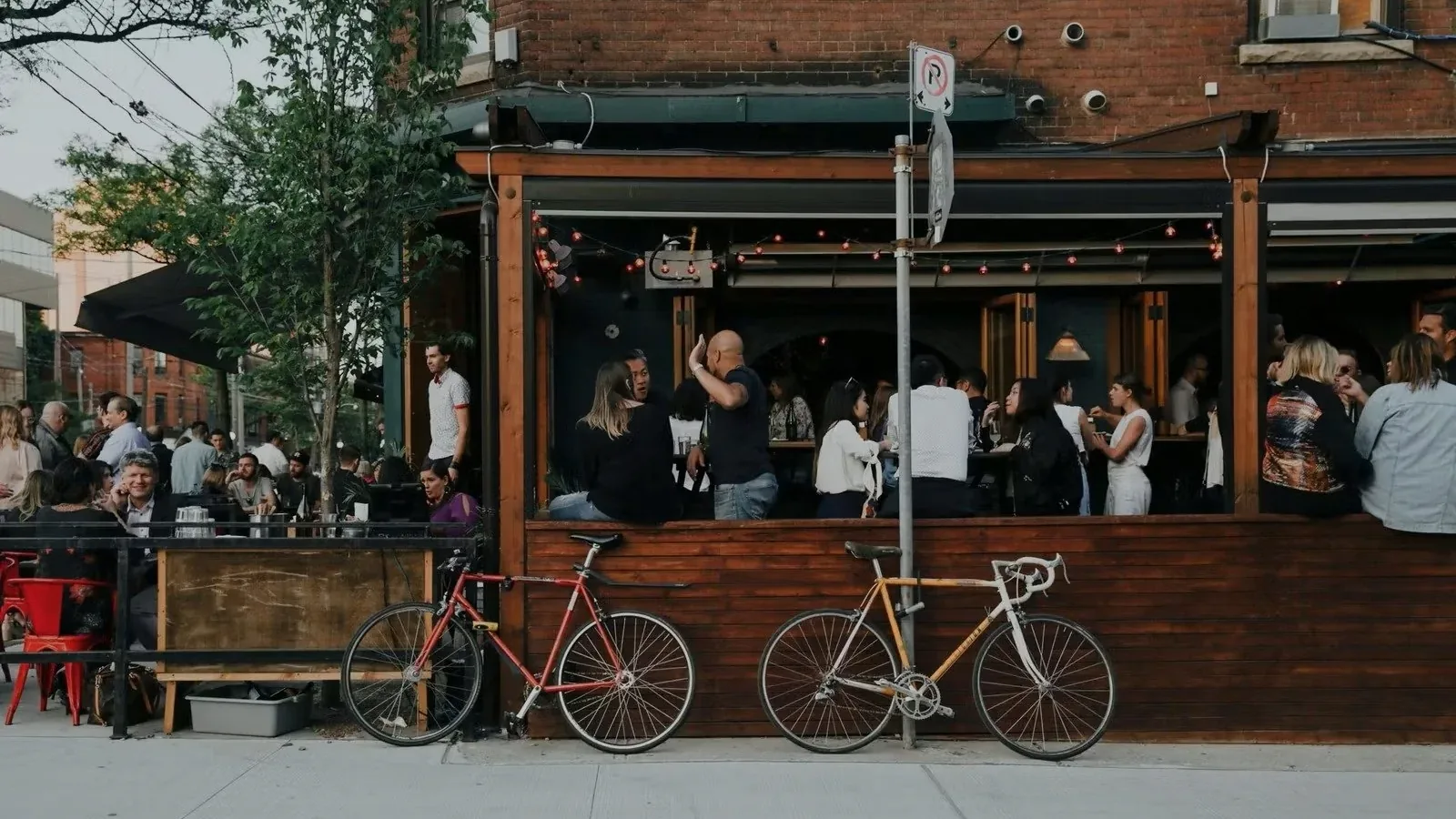
Distillery District at a glance: 10-acre pedestrian-only heritage district in east downtown Toronto · 47+ Victorian-era industrial buildings (largest such collection in North America) · former Gooderham and Worts Distillery (est 1832, closed 1990, restored 2003) · restaurant-and-bar anchored rather than nightclub-anchored · venue closing hours 11pm-1am typical (vs King West 2am-4am) · crowd skews 35-55 · Toronto Christmas Market mid-November to late December (the district's largest annual event) · pedestrian cobblestone streets (Trinity Street, Tank House Lane, Mill Street) · closest transit 504 King streetcar to Parliament Street.
Why the Distillery District operates differently from the rest of Toronto nightlife
The Distillery District's nightlife identity is structurally different from King West, Queen West, Ossington, or any other Toronto nightlife corridor. Three structural reasons.
The heritage architecture is the venue. Every bar and restaurant in the Distillery District operates inside Victorian-era industrial buildings — original brick walls, exposed iron beams, restored 19th-century distillery infrastructure, vaulted ceilings from the original Gooderham and Worts buildings. The buildings predate the venues by 150+ years; the venues are tenants in heritage architecture rather than purpose-built nightlife spaces. This creates atmospheric ceiling and value that newer purpose-built King West venues can't replicate — but it also constrains the venue formats. You can't drop a 1,000-capacity dance floor into a restored 19th-century distillery building. The architecture mandates the restaurant-and-bar format.
Pedestrian-only operations change the crowd flow. The Distillery District's internal streets — Trinity Street, Tank House Lane, Mill Street — are pedestrian-only year-round. No vehicle traffic, no taxi pickups inside the district, no Uber drop-offs at venue doors. This eliminates the bar-hopping-by-Uber pattern that dominates King West, where you can be at three venues in an hour. In the Distillery District, you arrive at the perimeter (Mill or Cherry Street parking, streetcar drop), then walk through the cobblestone streets to whatever venue you're going to, and back to the perimeter at the end of the night. The pedestrian-only structure makes the district feel like a self-contained European old town rather than a bar strip — and the crowd self-selects for that pace.
Closing hours run earlier than the King West tier. Most Distillery District restaurant-bars close their kitchens by 10pm and last call by midnight or 1am. There are no Music City North 4am festival-permit venues in the district. After midnight, the district empties out — for late-night programming, the crowd transitions to King West or the East End / Leslieville via streetcar. This earlier-closing structure shapes who chooses the Distillery District for an evening: it's the right call for a 7pm-11pm dinner-and-cocktails progression, not for a 11pm-4am party.
The eight venues that anchor the district
1. El Catrin Destileria — Mexican tapas + Canada's largest mezcal/tequila collection
18 Tank House Lane. The most reported Distillery District destination. El Catrin operates inside a converted heritage industrial building with high vaulted ceilings, exposed brick, hand-painted Mexican murals throughout, and a large patio that opens during the May-September season. The bar program centers on noted "Canada's largest mezcal and tequila collection" — the back bar is a wall of agave spirits with bartenders trained in the spirits' production methods and regional differences. The kitchen runs tapas-style Mexican (small plates, sharable) with full mains. Notable: margarita flight tasting (multiple tequilas across a flight, designed to teach palate differences). Reservations recommended for dinner Thu-Sun; bar walk-in usually viable mid-week.
2. Pure Spirits Oyster House and Grill — seafood + Ontario wine in Victorian architecture
17 Tank House Lane. The district's seafood anchor. Pure Spirits operates inside one of the district's most architecturally striking restored buildings — Victorian-era industrial space with original beam-work and exposed brick, a large central bar, and a heritage patio that catches afternoon sun. Daily-rotating oyster selection from East Coast, West Coast, and beyond; signature "Shucker's Dozen" tasting platform. The kitchen runs sustainable seafood program with seasonal mains, sharable sides, balanced cocktail and Ontario-wine program. Higher-end pricing than most of the district ($$$ to $$$$). Reservations strongly recommended Wed-Sun.
3. Cluny Bistro & Boulangerie — modern French dining + bar
35 Tank House Lane. The district's French-modern anchor. Cluny operates as a full-service bistro with strong adjacent bar program — cocktails, wine, and small bites accessible without committing to the dining room. The boulangerie component brings fresh pastry and bread service through the day; the bistro takes over for dinner. Best for dinner-with-cocktail-pairing rather than bar-first; the bar accepts walk-ins but the room is dining-anchored.
4. Mill Street Brewpub & Beer Hall — craft beer at the district's brewery site
21 Tank House Lane. The district's craft-beer destination on the site of Mill Street Brewery's original location. The Brewpub serves rotating Mill Street brews (Organic Lager, Tankhouse Ale, Stock Ale, seasonals) alongside pub-format food — sharing platters, burgers, fish and chips, brewery-classics menu. Larger and more casual than Cluny or Pure Spirits, accommodates groups well, walk-in-friendly. The Beer Hall format (large communal tables, brewery-tour aesthetic) is the district's most accessible casual-dining-with-drinks venue.
5. Madrina Bar y Tapas — Catalonian tapas + Spanish wine
2 Trinity St. The Spanish-Catalonian tapas anchor. Madrina runs authentic tapas program with real Spanish wine list and cocktail program incorporating Spanish ingredients (sherry, vermouth, Spanish gin). The format suits group dinners or extended bar-snack-and-wine sessions. Smaller scale than El Catrin or Pure Spirits; reservations recommended weekends.
6. BOKU — Japanese izakaya + sake bar
Distillery District. The district's Japanese anchor. BOKU runs sushi, ramen, and izakaya-format small plates alongside a sake program and Japanese-cocktail bar. Lower-key than the major restaurant anchors; works well for dinner pacing or shared-plate format with sake flights.
7. SpiritHouse Toronto — cocktail bar + live entertainment
Distillery District. The closest the district has to a cocktail-bar-first venue. SpiritHouse runs an extensive cocktail program with live entertainment programming (DJs, occasional live music, occasional event programming). Less dining-focused than the other anchors; you can spend an evening here without committing to a dinner. Functions as the district's go-to for after-dinner cocktails or pre-show drinks if you're going to a Distillery event.
8. Spirit of York Distillery Co. — working craft distillery + tasting room
12 Trinity St. The district's operational connection to its distilling heritage. Spirit of York is a working craft distillery (gin, vodka, other spirits) operating within the heritage district since 2014. On-site tasting room, bottle shop, distillery tour availability. Not a bar in the dining-bar sense — this is a tasting-room-and-retail format — but the most direct experience available of the district's continued distilling identity. Worth a daytime visit if you're interested in the heritage.
The three event windows that transform the district
Toronto Christmas Market · mid-November to late December
The district's largest annual event by attendance and the most reported Distillery District programming. Toronto Christmas Market runs European-style holiday market programming through the heritage building courtyards — hot mulled wine, glühwein, sausage and pretzel vendors, holiday gift markets, live performance programming, ice-skating, the giant central Christmas tree, and the heritage architecture wrapped in holiday lighting. The market is among the Instagrammed Toronto winter destinations and drives meaningful bar and restaurant traffic for the November-December window. Reservations at El Catrin, Pure Spirits, Cluny, and Madrina should be booked 4-6 weeks ahead during Christmas Market season. Entry to the market itself is free during specified weekday windows; weekends typically require timed-entry tickets ($10-$20 range).
Light Fest · January to February
The winter extension after Christmas Market closes. Light Fest brings installation-art light-based works throughout the district's cobblestone streets and heritage buildings, extending the December atmosphere through the deep winter months. Free public access; runs typically late January through late February. Drives lower-but-meaningful bar and restaurant traffic during what would otherwise be the slowest months of the year for the district.
Distillery Jazz Festival · July long weekend
The summer signature event. Jazz programming across multiple venues throughout the district over the July 1 long weekend (Canada Day-adjacent). Free outdoor stages, ticketed venue performances, food vendors, and meaningful bar/restaurant overflow. Reservations during festival weekend should be booked 3-4 weeks ahead.
Year-round programming
Beyond the three major event windows, the district hosts art gallery openings, smaller seasonal events (Beerlicious during Toronto craft beer week, Summer Tasting events, Cherry Blossom-adjacent programming when the nearby trees bloom), and occasional production shoots (the cobblestone streets are noted favorites of film and TV crews; the district occasionally closes individual blocks for productions). Check Distillery District official programming calendar for current event windows.
Distillery District vs other Toronto nightlife corridors
| Corridor | Format | Crowd | Close | Best For |
|---|---|---|---|---|
| Distillery District | Restaurant-and-bar anchored | 35-55, upscale-casual | 11pm-1am | Dinner-and-cocktails dates, heritage atmosphere |
| King West | Supperclub + nightclub | 25-45, upscale | 2am-4am | Bottle service nights, hip-hop/R&B/EDM |
| Queen West | Indie bars + live music | 20-35, alternative | 2am | Indie shows, casual nights, low cover |
| Yorkville | Hotel bars + upscale lounge | 35-65, luxury | 12am-2am | Hotel-bar cocktails, business meetings |
| Ossington | Cocktail bars + restaurants | 25-40, design-conscious | 2am | Cocktail crawls, dinner-then-bar progressions |
Practical Distillery District logistics
Getting there
The 504 King streetcar to Parliament Street stop is the most direct transit option — 5-minute walk from the streetcar stop south into the district. Line 1 subway to King station puts you about a 15-minute walk east (or use the 504 King streetcar from King station). The 503 Kingston Road tripper bus is the alternative for east-end approaches. Driving is possible but parking is restricted to perimeter lots (Green P at Mill / Cherry, Front / Cherry) and street parking on Mill and Cherry Streets — both fill during Christmas Market season and event weekends. Rideshare drop-off at the Mill or Cherry Street perimeter; pickup similarly. The district itself is pedestrian-only inside.
Reservation timing
Non-event weekdays: walk-in viable at most venues during 6pm-8pm windows; reservation recommended for groups of 4+ or for specific tables. Non-event weekends: reservations 1-2 weeks ahead for the major anchors (El Catrin, Pure Spirits, Cluny). Christmas Market season (Nov 15 - Dec 24): reservations 4-6 weeks ahead, walk-in functionally impossible at peak times, expect significant pedestrian congestion in the cobblestone streets. Distillery Jazz Festival weekend (July long weekend): reservations 3-4 weeks ahead. Other event days: check programming calendar and adjust.
Dress code
Upscale-casual throughout. No dress codes as restrictive as King West Fashionable Forward Attire; jeans-and-blazer or cocktail dress fits any venue. Sneakers acceptable at Mill Street Brewpub, Cluny lunch service, and SpiritHouse; the higher-end dining venues (Pure Spirits, El Catrin dining room) prefer non-athletic footwear. No athletic wear, no shorts at dinner programming. Heritage cobblestone streets reward stable footwear — heels are awkward on uneven historic stone.
Cost calibration
Mid-to-upper Toronto pricing across the district. Cocktails $18-$24 at most venues; oyster service $4-$6 per oyster at Pure Spirits; tequila/mezcal flights at El Catrin $35-$65 depending on tier; sake flights at BOKU $20-$40; tapas plates at Madrina $14-$22; Mill Street Brewpub pub menu $18-$32 mains. Dinner-with-drinks for two: $120-$200 typical at mid-tier venues, $200-$350 at Pure Spirits or El Catrin's dining-room tier. Holiday surcharges during Christmas Market season modest but present.
Best season + time
Two strong seasons. November-December for Christmas Market atmosphere (the district's most-Instagrammed period, with the trade-off of heavier crowds and harder reservations). May-September for patio operations (El Catrin and Pure Spirits patios open, Mill Street Brewpub beer hall outdoor seating, longer daylight for cobblestone-street walking). Worst time: deep January and February non-Light-Fest weekdays, when the district feels emptier and several venues run reduced winter programming.
Distillery District FAQ
Where is the Distillery District?
East downtown Toronto, bounded approximately by Mill Street south, Cherry Street east, Front Street north, Parliament Street west. Pedestrian-only internal streets (Trinity, Tank House Lane, Mill). Closest transit: 504 King streetcar to Parliament Street stop.
What's the story behind the district?
Originally the Gooderham and Worts Distillery (est 1832, one of the world's largest distilleries by 1870s). 47+ Victorian-era industrial buildings — the largest collection of Victorian industrial architecture in North America. Closed 1990, restored and reopened 2003 as the pedestrian arts/dining/event district.
How is Distillery District nightlife different from King West or Queen West?
Restaurant-and-bar-anchored, not nightclub-anchored. No dance-floor venues. Older crowd (35-55 vs King West 25-45 or Queen West 20-35). Earlier closing (11pm-1am vs King West 2am-4am). Upscale-casual dress rather than Fashionable Forward Attire. Best for refined dinner-and-cocktails in heritage architecture; not for late-night dance floor.
Best cocktail bars in the district?
El Catrin (Canada's largest mezcal/tequila collection), Pure Spirits (Ontario wine + cocktail program with oysters), Madrina (Catalonian wine + Spanish cocktails), SpiritHouse (cocktail-bar-first format with live entertainment), Mill Street Brewpub (craft beer alternative at the district's original brewery site).