
The Best Times to Go Out in Toronto
Most Toronto nightlife planning treats timing as a side question to venue selection — pick a club, then figure out what time to show up. The framing is backwards. Toronto's nightlife operates on reported timing patterns: Friday-Saturday peak across most venues, the 10:30-11:30 PM optimal arrival window for major clubs, the rising Thursday programming for slightly older professional crowds, the Sunday industry-night identity, the seasonal swings (TIFF September, Pride June, Caribana August, NYE December), and the time-of-month payday-weekend effects at premium venues. Showing up at the wrong time means: empty venue and awkward energy if too early, long lines and rejected entry if too late, wrong-night programming if you didn't check the venue's day-specific schedule. This is the strategic timing guide — day-of-week patterns, optimal arrival windows, seasonal cycles, and the time-of-month effects that shape when Toronto nightlife actually delivers the experience you're paying for.
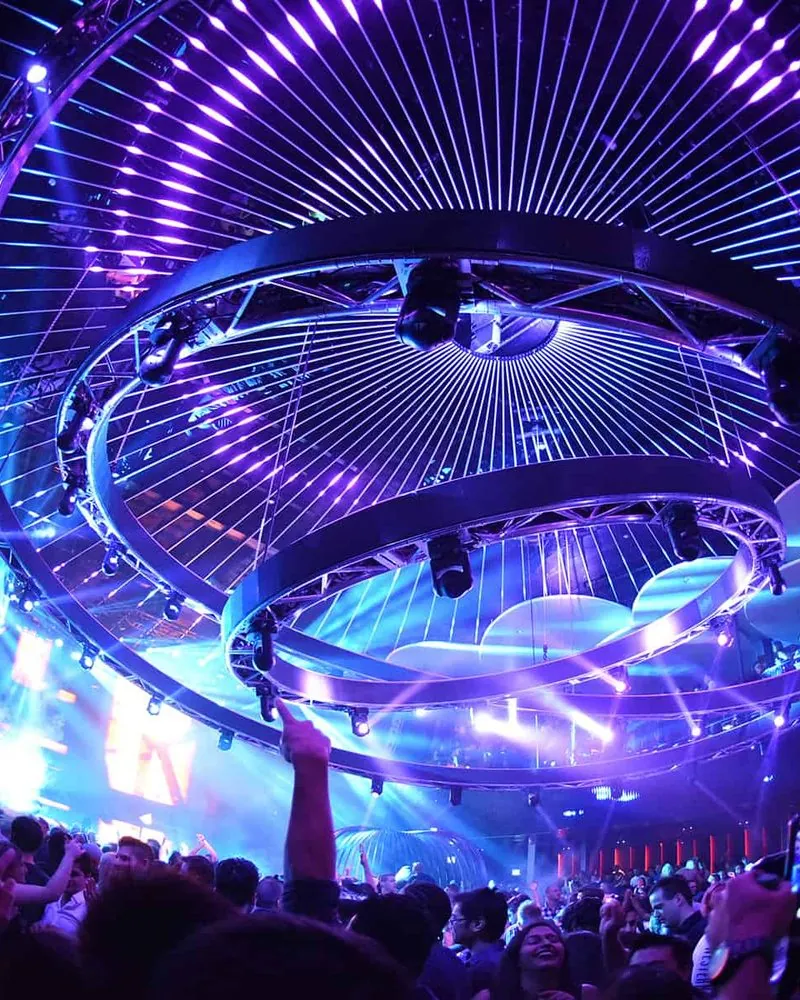
Best times at a glance: Friday-Saturday peak nights citywide · 10:30-11:30 PM reported optimal club arrival window · Thursday rising for older professional crowd (Lavelle Thu-Sun, Lost & Found 4 nights Mon/Thu/Fri/Sat) · Sunday industry night · Mon-Wed quieter (Tuesday quietest, Wednesday improving with emerging programming) · summer June-Sept peak (patios + Cabana + rooftops + Pride + Caribana) · September TIFF meaningful uplift King West / Yorkville · December NYE most premium night ($50-$200+ cover) + office Christmas Dec 1-23 · Jan-Mar slowest (cold months) · payday weekends busier at premium venues · closing 2am bars + 30-min door cutoff before close.
Day-of-week patterns
Monday: The quietest commercial night
Most Toronto clubs are closed Monday. The exceptions are programmed niche venues — Lost & Found runs as one of the few clubs with Monday programming (considered exclusive parties four nights including Monday). Most bars operate full hours regardless of crowd. Restaurants run standard hours. Monday works for: quiet date nights without weekend crowds, dive bars and pubs that operate same hours regardless of day, specific Monday programming at venues that run it. Not viable for: nightclub experiences, energetic group nights, peak music programming.
Tuesday: The quietest night overall
Toronto's reported slowest nightlife night. Most clubs closed. Many bars run shorter hours or close earlier. Restaurants thinner crowds. Tuesday works for: dive bars and pubs (Grossman's Tavern in Chinatown, Kensington Market dives), restaurant week or specific Tuesday promotions, quiet date nights, casual hang-out evenings without crowd intensity. Tuesday is the right night for visitors who don't want crowds.
Wednesday: Improving with emerging programming
Wednesday has seen the most growth in Toronto's weekday nightlife over the past 5-10 years. Some venues run industry nights, some Latin programming, some hip-hop nights, some Wednesday-specific theme programming. The crowd is mixed — some hospitality industry workers on their day-off equivalent, some students at universities with light Thursday schedules, some professional crowd treating Wednesday as a mid-week escape. Wednesday is the best weekday for visitors with weekday-only availability who want a closer-to-normal-nightlife experience than Monday-Tuesday provides.
Thursday: The rising professional night
Thursday has emerged as a legitimate Toronto club night, particularly for slightly older professional crowds (28-40 demographic). Some venues operate Thursday-Sunday rather than Friday-Saturday only. Lavelle runs Thursday-Sunday programming. Lost & Found runs Thursday as one of its four exclusive-party nights. The structural reason: real professional crowd wanting nightlife without Friday-Saturday peak crowds, plus university student crowds at schools with lighter Friday schedules. Thursday delivers: legitimate club programming at participating venues, shorter lines than Friday-Saturday, more crowd, often better music quality (DJs work harder when crowds are smaller and more attentive).
Friday: The peak professional / after-work / dressed-up night
One of the two peak nights citywide. The cited Friday character: after-work crowd transitioning into nightclub progression, slightly older skew than Saturday (32-40 strong presence alongside 25-32 core), more dressed-up given the post-work-clothes change-into-club-clothes pattern. King West, Polson Pier (Cabana Friday programming), Yorkville, Entertainment District all hit peak. Bar corridors Kensington / Queen West / Junction also peak.
Saturday: The peak dedicated-nightlife night
The other peak night. Saturday's character: dedicated nightlife crowd (not after-work overflow), broader age range (22-45 distributed rather than Friday's older skew), highest crowd density at major clubs. Saturday programming be the most-at top venues (DPRTMNT considered "more fashionable crowd" on Saturday vs Friday's "underground beats"). All major venues programmed. All corridors at peak. Cover charges highest. Lines longest. Rideshare surge most aggressive.
Sunday: The industry / brunch / afternoon-programming night
Sunday operates differently than other nights. Sunday daytime / afternoon programming is increasingly common — Kensington's Sunday afternoon programming in Kensington Mall, brunch-and-drinks at multiple venues, daytime patio programming in summer. Sunday evening runs as the reported industry night for hospitality workers (most servers / bartenders / kitchen staff have Mondays off so Sunday is their standard night out). Some Latin clubs run Sunday programming. Some lounges run Sunday programming. Lavelle Thu-Sun catches Sunday traffic. Generally Sunday late-night runs quieter than Friday-Saturday but viable for specific use cases.
Optimal arrival times by venue type
Nightclubs: 10:30-11:30 PM noted window
Major Toronto nightclubs hit optimal arrival at 10:30-11:30 PM. The reported timing: Lavelle is best arrived at before 11:30 PM to avoid waits, Love Child noted at 10:45 PM latest to avoid long lines, Toronto club coverage broadly recommends 10:30-11pm arrival.
The structural reason: clubs open 10pm with full DJ programming starting 10:30-11pm. Arriving 10:30-11:30 PM means walking in without waiting, getting prime spots before peak crowd density, and the DJ programming is already engaged but not yet at peak volume. Before 10:30 PM is too early — venue mostly empty, energy hasn't built, awkward feeling. After 11:30 PM means longer waits, reduced entry chance at selective doors, joining mid-evening rather than building with the crowd.
The 30-60 minute optimal arrival window is among the actionable Toronto nightlife planning insights.
Supperclubs and dinner-focused venues: 7-9pm reservations
King West supperclubs (Lavelle dinner program, Toca, Akira Back) and Yorkville hotel restaurants (Four Seasons d|bar, Bisha) operate dinner programming earlier than nightclub programming. Reservations 7-9pm work for the supperclub format. Many supperclubs transition from restaurant to dance-floor format around 10-11pm; arriving for dinner means staying through the transition rather than arriving fresh during peak.
Bar corridors: 8-10pm for peak crowd
Bar corridors (Kensington, Queen West, Junction, Ossington, Little Italy, Annex) peak earlier than nightclubs. The 8-10pm window catches the post-dinner crowd at full energy, with longer-stay venues sustaining crowds 10pm-midnight. Arriving 10pm-12am at bars hits the late-evening sustain phase rather than peak energy.
Live music venues: Check showtime
Live music venues operate differently — arrival depends on showtime not on generic club timing. Horseshoe Tavern, Lee's Palace, El Mocambo, 3030 Dundas West, Coda all run shows with specific start times. Arrive 15-30 minutes before showtime for ticketed events. Some venues open doors 60-90 minutes before headliner to allow opening acts.
After-hours: 2am+ specific format
Toronto's after-hours scene (Coda extending past 2am to 6am, extended-permit venues) operates after standard bar close. After-hours arrival typically 2-3am after main-venue exits. After-hours venues are no-alcohol per Ontario regulations (the structural reason they can operate past 2am AGCO last call) and run dance-and-music focused programming rather than drinking-focused.
Seasonal patterns
Summer (June-September): Peak season
The Toronto nightlife peak season. Multiple drivers stack: Patios open across the city (Ronnie's Local 069 Kensington patio, every King West venue's outdoor extension, hotel rooftops). Cabana Pool Bar at Polson Pier operates full pool-and-cabana programming. Hotel rooftops peak: Lavelle, 1 Hotel Soluna, Bisha. Pride Toronto late June with Pride Parade Sunday + Church Street programming + downtown corridor Pride parties. Caribana (Toronto Caribbean Carnival) late July through early August — reported largest Caribbean carnival in North America with King West, Polson Pier, downtown corridors running Caribbean and Soca programming. Pedestrian Sundays in Kensington Market activating the neighborhood for car-free programming. Summer also brings solid tourism traffic.
Fall (September-November): TIFF + Halloween + transition
September TIFF (Toronto International Film Festival) drives celebrity-and-industry traffic to King West and Yorkville for the two-week festival window. Reported uplift across hotel bars (Four Seasons, Park Hyatt), supperclubs, and premium dining. October brings Halloween as a major nightlife event with venue-specific costume contests and themed programming. November transitions to indoor focus as patios close.
Winter (December-February): Holiday + NYE + slowest stretch
December brings the holiday party season — office Christmas parties run December 1-23 with real corporate booking at supperclubs and event spaces. NYE December 31 is the year's most premium club night citywide with cover charges $50-$200+ and mandatory bottle service or premium ticket purchases at top venues. January-March is the slowest stretch — coldest months reduce Tuesday-Wednesday foot traffic significantly, some venues close earlier on slow nights. February is described as Toronto's slowest nightlife month.
Spring (March-May): Recovery + graduation
April-May returns toward peak. St. Patrick's Day mid-March brings major pub crowds. Graduation season May drives grad nightclub programming (see Toronto Graduation Night Clubs Guide). Patios begin opening late April / early May. Caribana hype starts building.
Specific Toronto events that shift timing
Caribana (Toronto Caribbean Carnival, late July - early August)
cited largest Caribbean carnival in North America. Multi-week festival with meaningful Caribbean / Soca programming across King West, Polson Pier, and downtown corridors. The Grand Parade Saturday is the noted year's peak nightlife event for many Toronto venues. See Toronto Caribana Nightlife Guide.
Pride Toronto (late June)
One of the largest LGBTQ+ events in North America. Pride Parade Sunday + Church Street weekend programming + downtown corridor Pride parties. Late June timing. See Toronto Pride Nightlife Guide.
TIFF (Toronto International Film Festival, September)
10-day September festival. Celebrity-and-industry traffic shifts nightlife toward King West and Yorkville. Hotel bars (Four Seasons, Park Hyatt, Bisha, Shangri-La) see strong uplift. Premium supperclubs run TIFF-themed programming. Serious after-party scene at private events. See Toronto TIFF Nightlife Guide.
NYE December 31
The year's most premium club night. Cover charges $50-$200+ at top venues. Mandatory bottle service or premium ticket purchases. Plan 4-6 weeks ahead for venues. See Toronto New Year's Eve Clubs Guide.
NHL Toronto Maple Leafs games
Game nights at Scotiabank Arena drive post-game traffic to Entertainment District and King West sports bars / supperclubs. Playoff runs (April-June if Leafs qualify) create event-night surges much larger than regular-season games.
Concerts at Scotiabank Arena
Major concert nights drive post-event traffic to nearby Entertainment District (5-minute walk) and King West (15-minute walk or short rideshare). Plan reservations earlier on concert nights if targeting nearby venues.
Time of month effects
Toronto nightlife sees cited payday-weekend effects, particularly at premium venues.
Payday weekends run busier. Weekends following pay dates (typically 1st and 15th of the month, or end-of-month for some employer schedules) see higher crowd density at premium-pricing venues. King West bottle service venues, Yorkville hotel restaurants, premium supperclubs see most-visible payday effects given high per-visit spend.
End-of-month weekends slightly quieter. Before paydays, premium venues run quieter while standard / budget tier venues show less effect. The reported pattern: 28th-31st of month at premium venues runs measurably lower volume than 1st-7th.
Lower-tier venues less affected. Kensington Market dive bars, Junction independents, midtown pubs show minimal payday effect because per-visit spend is lower and demographics include more salaried-monthly versus hourly-bi-weekly workers.
Event-driven dates override. Caribana, NYE, Pride, TIFF, NHL playoffs all drive crowds regardless of pay-cycle timing. Don't expect payday effects to apply during major events.
For planning: if targeting premium venues, payday weekends run more competitive (longer lines, harder reservations, higher rideshare surge). If targeting standard / budget venues, the payday effect is minor and timing flexibility is broader.
The hour-by-hour evening
| Time | What's happening | Best to be at |
|---|---|---|
| 6-8pm | Dinner anchor — restaurants filling for evening | Supperclub or destination restaurant |
| 8-10pm | Bars filling with post-dinner + after-work crowds | Bar corridor (Kensington, Queen West, Junction) |
| 10-11:30pm | Clubs filling — optimal arrival window | Nightclub (King West, Polson Pier) |
| 11:30pm-12am | Peak arrival rush — longest lines forming | Inside already, not in line |
| 12am-1:30am | Peak crowd density at clubs | Dance floor or VIP table |
| 1:30am | Last call announced — door cutoff begins | No new entries to most venues |
| 2am | AGCO last call — venues clearing | Heading to food or after-hours |
| 2-3am | Post-club food rush + after-hours opening | Chinatown / King West late food, or Coda |
| 3am+ | After-hours venues only — Coda runs to 6am | Coda or 24-hour food (7 West, Pho Pasteur) |
Best Times FAQ
Peak nightlife nights?
Friday and Saturday clearly. Most major clubs (Piston, Future, Love Child, 44 Toronto, Door 3) run Fri-Sat only. Saturday slightly busier for high-volume clubs, Friday better for slightly older professional crowds via after-work-to-club pattern. All major corridors peak Fri-Sat.
When to arrive at nightclubs?
10:30-11:30 PM noted optimal window. Lavelle best before 11:30 PM, Love Child by 10:45 PM. Clubs open 10pm + DJ programming 10:30-11pm + you arrive after warm-up but before peak lines. Before 10:30pm = too empty. After 11:30pm = long waits + reduced entry chance.
Thursday and Sunday?
Thursday rising for professional crowd. Lavelle Thu-Sun. Lost & Found 4 nights Mon/Thu/Fri/Sat. Shorter lines + more crowd. Sunday: industry night for hospitality workers + brunch-and-drinks venues + some Latin programming. Generally quieter late-night.
Monday-Wednesday?
Monday quietest commercial night (Lost & Found exception). Tuesday quietest overall — works for dive bars, quiet dates, restaurant week. Wednesday improving with emerging industry nights, Latin programming, hip-hop nights. Wed best weekday for closer-to-normal-nightlife experience.