
Chinatown Nightlife
Most Toronto nightlife guides treat Chinatown as a footnote — a late-night food destination after the real evening has ended elsewhere. The reality is more interesting. The Spadina-Dundas core has the longest-running dive bar in Toronto (Grossman's Tavern since 1948) and one of the country's legendary live music venues (El Mocambo on Spadina), plus a cocktail-bar tier anchored by Slice of Life and Big Trouble. The strip doesn't compete with King West for opening-the-night programming, but it offers a mid-evening through late-night sequence that's hard to replicate elsewhere in the city: dive bar drinks, live music if there's a show, cocktail bar transition, then the city's most-developed late-night food infrastructure within a 3-block radius. This is the editorial guide to Chinatown as a deliberate nightlife destination rather than as a default eating stop.
Quick caveat: Toronto nightlife moves fast. Prices, hours, and dress codes change. Confirm anything time-sensitive with the venue directly before you go.
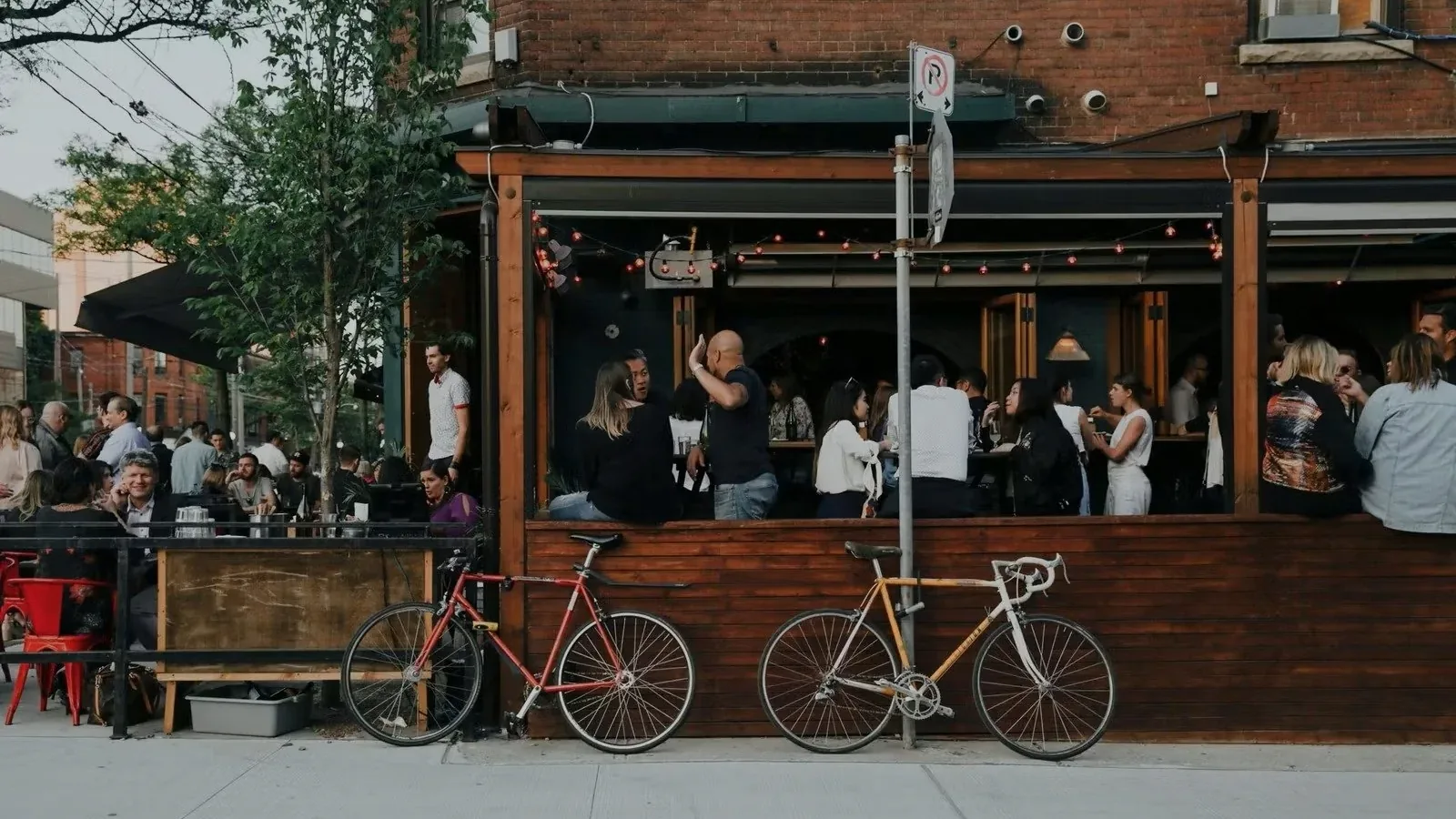
Chinatown at a glance: central-west Toronto radiating from Spadina Avenue + Dundas Street West intersection · noted largest Chinatown in North America · 510 Spadina streetcar + 505 Dundas streetcar serve the corridor + Line 1 subway via Spadina station · venue mix: dive bar institution (Grossman's Tavern at 379 Spadina since 1948), live music legend (El Mocambo at 464 Spadina), cocktail bars (Slice of Life, Big Trouble), Bar Hop, Big Trouble, plus the city's most-developed late-night food layer (Rol San dim sum, House of Gourmet, Pho Pasteur 24hr, Owl of Minerva til 4am, Oxtail Pho & Banh Mì til 5am Fri-Sat) · pricing lower than King West · closing 2am at bars + restaurants extend much later.
Why Chinatown is a serious nightlife corridor
The mainstream framing — "Chinatown is where you go for food after the club" — is half right and distinctly incomplete. Yes, Chinatown is the cited best late-night food destination in Toronto. But the neighborhood also has a distinct on-its-own nightlife identity built around three structural strengths:
The longest-running tavern in the area. Grossman's Tavern at 379 Spadina Avenue has operated since 1948 — making it one of Toronto's longest-continuously-operating music venues. The kind of venue where music history happened across multiple decades and where the dive-bar identity is genuine rather than aesthetic.
El Mocambo as a destination live music venue. The Spadina Avenue institution has hosted major touring acts for decades (including the famous Rolling Stones 1977 club shows) and underwent extensive renovation in the late 2010s to upgrade production while retaining the palm-tree neon sign exterior. Two-floor venue with simultaneous programming capabilities.
The cocktail-bar tier. Slice of Life is the cocktail-bar anchor of the corridor — an elevated cocktail program that operates without the hidden-entrance theatrics. Big Trouble adds a contemporary cocktail option on the same axis. The corridor lost its most famous hidden bar in 2025 when Cold Tea closed its Queen West location after its original Kensington Mall basement (1186 Queen W) had already shuttered in 2020. Nothing has fully replaced the hidden-entrance + dim sum + Sunday BBQ format Cold Tea ran for a decade.
Combined with the late-night food infrastructure, the result is a neighborhood that supports multi-mode evenings: dinner at one of the noted restaurant institutions, drinks at Grossman's or one of the dive bars, optional live music at El Mocambo if there's a show, late-night cocktails at Slice of Life, then post-everything food at Rol San or Pho Pasteur. That's a 5-stop evening within a 10-block radius, all reachable by streetcar.
Grossman's Tavern — the dive bar institution
379 Spadina Avenue. Open since 1948. One of Toronto's longest-running music venues. The defining Chinatown dive bar.
The format
Dive bar in the most-genuine Toronto sense of the term: standard bar service with extensive beer-and-shot programming, well-maintained tap selection (mid-range mainstream taps plus rotating craft selections), live music programming on a tight performance stage that has hosted blues and roots music for decades. The interior runs the reported dive-bar aesthetic: worn wood, posters from past performers, the kind of atmosphere that exists because it has actually existed for 75+ years rather than because someone designed it to look that way.
The programming
Live blues and roots music is the historic anchor. The venue runs ongoing live music programming with both Toronto-local acts and touring blues / roots musicians. Cover charge typically $5-$15 for live music nights; walk-in viable for non-show evenings. The kind of venue where you might catch a Toronto blues legend or hear a touring band working through a regional tour.
When to go
Strong for: blues / roots music fans, dive-bar appreciation, evenings that don't require King West dress codes or Yorkville polish, post-OCAD or post-class casual drinks at the student-friendly end of the price tier. Walk-in is the standard approach — this isn't a reservations-driven venue. Pre-show timing 7-9pm for warming up; main programming 9pm-12am typically; post-show or no-show evenings flow into the 12am-2am close.
El Mocambo — the live music legend
464 Spadina Avenue. The palm-tree neon sign exterior is one of Toronto's most-recognized music venue facades. Multi-decade institution with reported history of major touring acts including the Rolling Stones 1977 club shows that became part of music industry history.
The renovation and current state
El Mocambo underwent extensive renovation in the late 2010s, re-opening with significantly upgraded production capabilities (sound, lighting, staging) while retaining the exterior and key interior elements. The result: a venue that combines the heritage identity with contemporary technical capability. Two performance spaces (main floor and upper level) allow simultaneous programming — some nights have separate shows running on each floor.
The programming range
Across rock, alternative, indie, and rotating live music genres. Both touring acts and Toronto-local programming. The venue is on the reported Toronto touring circuit, so check the current calendar for specific upcoming shows. Ticketed shows are the standard format; cover-only or walk-in viable for select local programming nights.
Dinner-and-show planning
El Mocambo's Spadina Avenue location makes dinner-and-show evenings structurally easy — the surrounding Chinatown restaurant tier provides dinner options within a 5-minute walk in all directions. Standard sequence: 6:30-8pm dinner at a Chinatown restaurant, 8:30-9pm walk to El Mocambo, 9pm-11:30pm show, optional post-show extension to a Chinatown bar or late-night food spot.
Slice of Life, Big Trouble, and the cocktail bar tier
Cold Tea — closed 2025
Cold Tea was the defining hidden-bar of the 2010s Toronto scene — a basement room at the back of Kensington Mall, marked only by a red light above a grey door. The Kensington Mall original closed in 2020 after a lease dispute. The Queen West successor location closed permanently in fall 2025. Both gone. The format the bar ran — hidden basement, dim sum, cocktail program, Sunday BBQ, late-night dance — hasn't been fully replaced in the Chinatown-Kensington geographic area. See the corrections log for closure documentation.
Slice of Life
A Chinatown-Kensington cocktail bar with a strong cocktail program. Bartender skill is noted in local reviews; drinks include Margarita and Melon Highball formats. The room handles conversation well. Strong for: cocktail-focused evenings that want a more conventional bar experience while staying in the Chinatown-Kensington geographic context.
When to choose hidden cocktail bars over the dive bar tier
The hidden cocktail bars run more on the discovery-and-quality framing than the dive-bar straightforwardness of Grossman's. Choose Slice of Life or Big Trouble for: cocktail-quality-focused evenings, dates where you want the venue to be conversation-worthy, end-of-night extensions where you want the elevation from earlier-evening drinks. Choose Grossman's for: live music nights, dive-bar appreciation, casual end-of-night drinks without the elevated cocktail-bar pricing.
The broader Chinatown bar tier
Big Trouble
Chinatown bar with creative cocktail program. The contemporary cocktail bar option for the strip. Walk-in viable most evenings.
Bar Hop
Beer bar with rotating tap selection. Multiple Toronto locations; the Spadina-area location is structurally Chinatown-adjacent (technically just outside the southern boundary). Strong for: serious beer drinkers, evenings that center on craft-beer rotation rather than cocktail or food focus.
Handlebar
In Kensington Market immediately west of Chinatown. The noted bike-themed bar (bronzed bikes anchored on the wall) with craft beer and creative cocktails. Long-narrow space with a back-room stage that hosts comedy and small live music programming. Strong for: groups wanting Kensington Market vibe with a specific venue character.
Saint John's Tavern
Chinatown / Old Toronto adjacent. Traditional tavern format with beer-focused programming.
The Embassy Bar
Multi-room bar near Chinatown / Old Toronto area. Pool tables, music programming.
Bar Dem, After Seven, Liquid Courage
The smaller Chinatown bar layer. Each runs its own specific format; walk-in is the standard approach.
The restaurant context and late-night food
Chinatown's restaurants matter for nightlife planning in two ways: as dinner anchors before evenings start, and as the cited best late-night food destination in Toronto from across the city.
Dinner anchors
R&D by Chef Alvin Leung (of MasterChef Canada fame) is the noted contemporary Chinatown dinner hot spot — elevated Chinese fusion with serious culinary credentials. Dai Lo on College Street (just north of the core) is elevated Cantonese cuisine. Midnight Snack Bar on College Street runs inventive teapot cocktails and Japanese-inspired "wafu pastas" — a hybrid format. Beyond the named contemporary destinations, the broader Chinatown restaurant tier provides dozens of traditional Cantonese, Vietnamese, Korean, and pan-Asian options at the casual price tier.
Late-night food (the destination layer)
Rol San is the noted Chinatown dim sum late-night institution — har gow (shrimp dumplings), rice, and noodle dishes available late into the night. House of Gourmet runs late-night Cantonese comfort food (roast pork, crispy ginger beef, BBQ, sizzling plates and flavourful noodles). Pho Pasteur runs 24-hour Vietnamese with heaping affordable portions. Owl of Minerva on Spadina runs until 4am Friday and Saturday for Korean soup / noodle / stir-fried programming (the cited 4am Korean late-night option). Oxtail Pho & Banh Mì runs until 4am weekdays and 5am Friday-Saturday with authentic MSG-free Vietnamese.
Why this matters for nightlife from other corridors
Chinatown's late-night food density makes it the default destination from King West, Queen West, Entertainment District, and downtown clubs for post-club eating. 5-10 minute rideshare from most major nightlife corridors. The food is the structural reason a strong portion of Toronto's after-2am traffic ends in Chinatown rather than in the original nightlife corridor. See the Toronto Late Night Food Guide for full corridor mapping.
Chinatown FAQ
Where is Chinatown in Toronto?
Radiates from Spadina Avenue + Dundas Street West intersection. Roughly College Street north to Queen Street West along Spadina spine. Cited largest Chinatown in North America. 510 Spadina + 505 Dundas streetcars + Line 1 subway via Spadina station. Dragon City Mall landmark at Spadina-Dundas.
Character of Chinatown nightlife?
Hybrid: thinner direct-bar layer than King West / Queen West but strong dive bar + live music + hidden cocktail bar tier within 5 blocks, plus Toronto's most-developed late-night food infrastructure. Strong as mid-evening or late-night drinks-and-food destination. Crowd 20-35 with OCAD + U of T student traffic. Lower pricing than King West. Closing 2am bars, restaurants extend much later.
What is Grossman's Tavern?
379 Spadina Ave. Since 1948. One of Toronto's longest-running music venues. Dive bar format with extensive beer / shot programming + live blues and roots music programming on tight stage. Cover $5-$15 for music nights, walk-in for non-show. Genuine dive bar (75+ years operating, not aesthetic).
Is Cold Tea still open?
No. Cold Tea was the defining hidden basement bar of Kensington Market in the 2010s (red light above grey door at the back of Kensington Mall). The original Kensington Mall location closed in 2020 when the lease ran out. The Queen West successor (1186 Queen W) closed permanently in fall 2025. Nothing currently replicates the format.
El Mocambo?
464 Spadina Ave. Toronto's most live music venue. Multi-decade institution with cited major touring history including Rolling Stones 1977 club shows. Renovated late 2010s with upgraded production while retaining palm-tree neon exterior. Two-floor venue with simultaneous programming. Across rock / alternative / indie + Toronto-local programming.